rare · People & Influence · PRO deck · first card free
Choice architecture and the hidden design of daily life
Design & Economics. In the app: Hidden Architectures of Daily Life.
About this deck
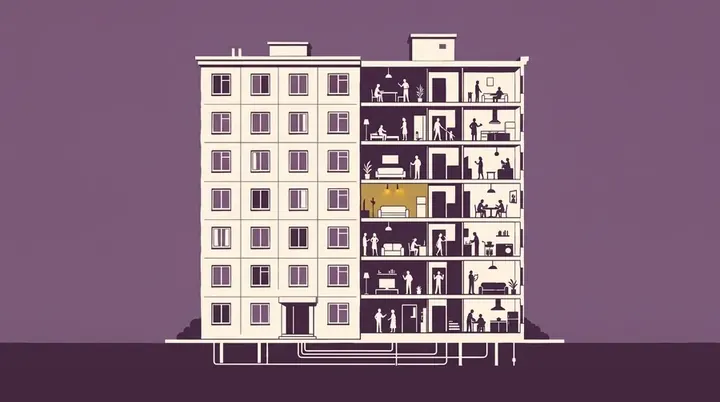
Every day you move through forms, shops, apps and streets that someone designed to steer you. This deck gathers eight ideas from behavioral economics, urban design and technology criticism that explain how that steering works: choice architecture, hostile design, decoy pricing, the convenience trap, the attention economy, designed friction, loss leaders and surveillance capitalism. It draws on work such as Thaler and Sunstein's Nudge and Shoshana Zuboff's The Age of Surveillance Capitalism. After the deck you will be able to spot the hidden hand in a menu, a pricing page or a cancellation flow, tell protective design from extractive design, and set up simple defenses that work better than willpower.
The 8 ideas
Choice Architecture
The order and shape of options decides what gets chosen.
Choice architecture is the way options are arranged before you ever pick one. Defaults, ordering, wording and effort all push decisions in a direction, so whoever designs the layout often shapes the outcome more than the person choosing.
Hostile Design
Public spaces are shaped by who they're built to exclude.
Hostile design, also called defensive architecture, shapes public space to keep certain people or behaviors out. Divided benches, spikes and loud music quietly decide who can rest, sit or linger, usually without anyone announcing it.
Decoy Pricing
The middle option exists to make one of the others look right.
The decoy effect is a pricing pattern where one option exists mainly to make another look like a bargain. The decoy is priced or sized so it is clearly poor value, which nudges buyers toward the option the seller wanted to sell.
The Convenience Trap
Things designed to be easy capture more of your life than things designed to be useful.
The convenience trap is what happens when products remove every small pause where you might reconsider. One-click buying, autoplay and endless feeds feel helpful, but they quietly capture more of your time and money than you would choose to give.
The Attention Economy
You are the product being sold.
In the attention economy, many free services earn money by selling access to your attention, usually to advertisers. That makes the advertiser the paying customer, and it explains why so many free products are built to keep you looking for as long as possible.
Designed Friction
Some friction is deliberate. Notice when it appears.
Designed friction is a kind of dark pattern where effort is added exactly where you might leave. Signing up takes a minute, cancelling takes a phone call. That lopsided difficulty between joining and exiting is the clearest sign the friction was put there on purpose.
Loss Leaders
The thing they're losing money on is to capture the thing they're not.
A loss leader is a product sold cheaply, sometimes below cost, to bring you in for something more profitable. Cheap printers and razors are classic cases. The price you notice is often not the price you end up paying over time.
Surveillance Capitalism
Your behavior is the raw material for products you'll never see.
Surveillance capitalism is Shoshana Zuboff's name for an economy that turns your online behavior into predictions and sells them. The free service is the collection method. The real product is a forecast of what you will do, bought by parties you will likely never meet.
Test yourself
Two questions from the deck quiz. Pick an answer to see the explanation.
1. What does 'choice architecture' claim about decisions?
Show the answer
How options are arranged shapes what gets chosen, often more than the options. The card's core claim: defaults, order and friction decide outcomes. There is no neutral arrangement; every shape is a nudge.
2. Your coworking space swaps its couches for backless stools 'to boost productivity'. Which idea best explains the real effect?
Show the answer
Hostile design: the furniture discourages people from lingering. The stated reason is productivity, but the effect is to make staying uncomfortable. That is hostile design at office scale.

Walk this deck as a journey
In CODEX, Hidden Architectures of Daily Life is a world on the map: read each card in full, earn stars in the quiz, complete the field missions and beat the boss quiz. The first card is free; CODEX PRO unlocks the rest, with a 7-day free trial on the yearly plan.